


Refractive Surgery
Refractive surgery is an innovative and effective treatment for correcting common vision problems such as myopia, hyperopia and astigmatism.
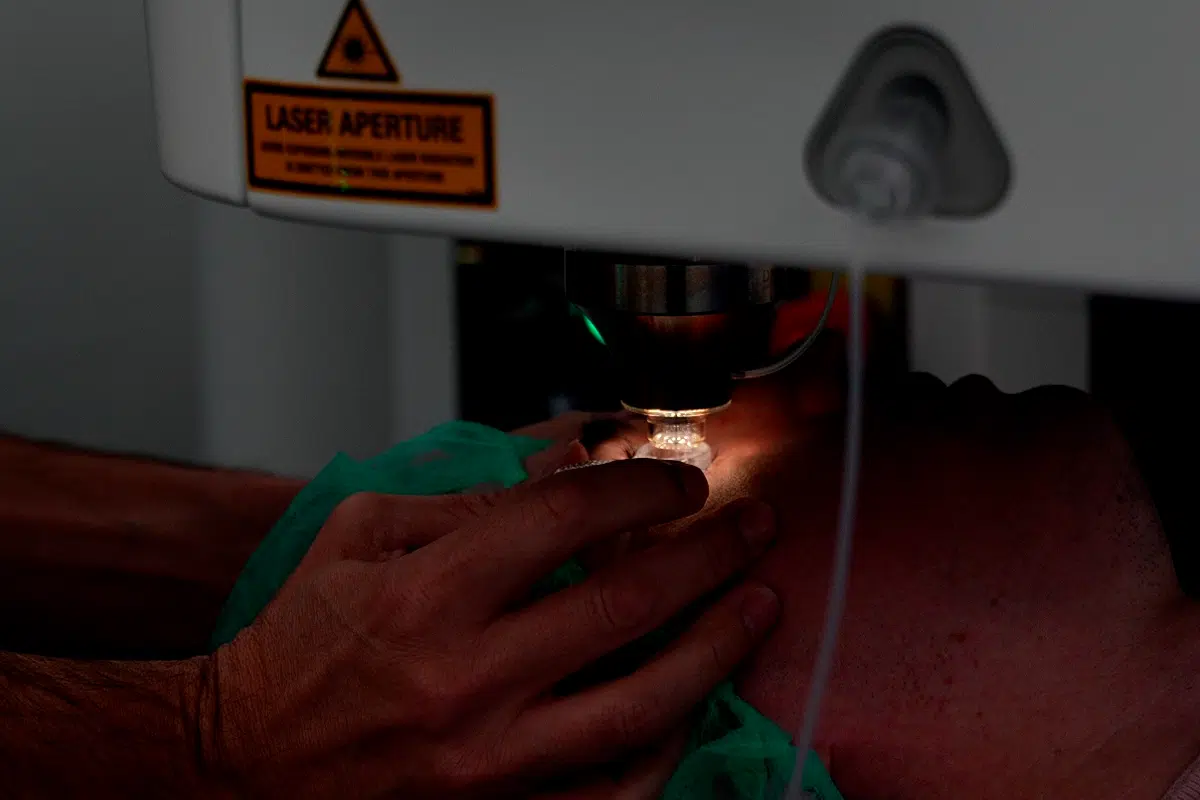
It is one of the most frequently performed and most widely studied medical procedures in the world.
Most patients experience a significant improvement in their vision.
Refractive surgery is considered one of the safest procedures.


What is Refractive Surgery?
Refractive surgery uses laser technology to correct refractive errors in the eyes, that is, the problems that affect the eye's ability to focus properly.
Through procedures such as LASIK, PRK or Femto-LASIK, it is possible to correct the shape of the cornea, allowing light to focus correctly on the retina and improving vision without the need for glasses or contact lenses.
Types of refractive surgery we offer:
✅ LASIK: The most common option for correcting myopia, hyperopia and astigmatism.
✅ PRK: For patients with thinner corneas or who are not candidates for LASIK.
✅ FEMTO-LASIK: Superior in precision, safety and recovery thanks to its femtosecond laser technology, which allows an extremely precise incision.
When is refractive surgery necessary?
Refractive surgery is ideal for patients who want to correct their vision and stop depending on glasses or contact lenses. Some situations that may lead you to consider this treatment are:
🔹 Myopia: Blurred vision of distant objects.
🔹 Hyperopia: Difficulty seeing close up.
🔹 Astigmatism: Distorted vision due to the irregular shape of the cornea.
🔹 Discomfort or inconvenience with glasses or contact lenses.
🔹 A wish to improve your quality of vision and reduce dependence on optical aids.
If you experience any of these symptoms, refractive surgery may be the solution you have been looking for.
Why do refractive problems occur in the eyes?
Refractive errors are caused by irregularities in the shape of the cornea or the lens, which affect the way light enters the eye. Although most people develop refractive problems as they get older, some factors can contribute to their onset:
✅ Genetic inheritance: Myopia, hyperopia and astigmatism are often hereditary conditions.
✅ Environmental factors: Excessive use of electronic devices and a lack of eye rest can increase the risk of developing refractive problems.
✅ Eye diseases: In some cases, other conditions such as glaucoma or dry eye syndrome can affect vision.
Regain your visual independence with laser surgery
Refractive surgery is quick, safe and effective. Depending on your diagnosis, the most common procedures we offer are:
🔹 LASIK (Laser-Assisted in Situ Keratomileusis)
One of the most popular procedures for correcting myopia, hyperopia and astigmatism. A laser is used to reshape the cornea and improve how light is focused on the retina. The procedure is quick and the recovery time is minimal.
🔹 PRK (Photorefractive Keratectomy)
In this procedure, the surface layer of the cornea is removed and a laser is used to reshape it. It is often recommended for people with thinner corneas or who cannot undergo LASIK.
🔹 Femto-LASIK: The evolution of LASIK with greater precision and safety
An advanced technique that improves on traditional LASIK surgery by using a femtosecond laser to create the corneal flap instead of a mechanical blade. This allows greater precision, a more uniform cut and faster recovery. Femto-LASIK reduces the risks associated with conventional surgery, improves corneal stability and provides better visual quality from the very first days.
Recovery
Patients generally notice improved vision the following day, and most can resume their daily activities within a couple of days. Refractive surgery is minimally invasive and is performed as an outpatient procedure, so no hospital stay is required.
Types of Procedures
💡Which type of procedure is best for you? In this video, Dr. Javier Ramírez explains everything you need to know about correcting myopia, hyperopia and astigmatism, the different types of surgery and which patients can benefit most from this treatment.
🔍 If you are thinking of saying goodbye to glasses and contact lenses, don't miss this expert guide. Press play and get all your questions answered! 🎬👁️

Femtosecond Laser:
Advanced Precision and Safety
💎 The most advanced technology to correct your vision
At Clínica Ramírez & Gálvez we rely on Femtosecond Laser Refractive Surgery, the most advanced and safest technique for correcting myopia, hyperopia and astigmatism. Unlike traditional LASIK surgery, Femto-LASIK is superior in precision, safety and recovery thanks to its femtosecond laser technology, which makes an extremely precise incision in the cornea without the need for blades.
This procedure minimises risks, shortens recovery time and improves visual outcomes, offering surgery tailored to each patient. If you are looking for the best option to correct your vision with maximum safety, femtosecond laser surgery is the most advanced solution available.
Our Clinic
Unique spaces designed with one philosophy: excellence in caring for your eyes.




Detailed Diagnosis
A trusted environment where we listen to you, carry out a detailed diagnosis and design a personalised treatment plan together.




Commitment to Excellence
A team of professionals led by Drs. Ramírez and Gálvez with a dual commitment: medical excellence and close, human care.


Cutting-Edge Technology
Equipped with the latest technology to ensure diagnoses of maximum precision and to plan every treatment with complete safety.
Answers to your questions
We answer the most common questions about refractive surgery. Here you will find all the information you need to regain your vision with confidence.
Is refractive surgery painful?
No. The procedure is performed under local anaesthesia, so you will not feel any pain during the operation. Afterwards, you may experience slight discomfort or a gritty sensation in the eyes, which disappears within a few hours.
How long does the surgery take?
Refractive surgery is quick, usually between 15 and 30 minutes per eye, depending on the chosen procedure.
How long will it take to recover my vision?
The improvement in vision is almost immediate, although the final results are fully noticeable between 2 and 4 weeks after surgery.
Might I need glasses again after surgery?
Most patients achieve full correction of their vision, which eliminates the need for glasses or contact lenses. However, in some cases, especially in people over 40, reading glasses may be needed (presbyopia).
Is refractive surgery safe?
Yes. Refractive surgery is very safe and has a high success rate. The procedure has been performed on millions of people worldwide with excellent results.