


Pterygium and Pinguecula
Pterygium and pinguecula are conditions of the ocular surface that can cause discomfort, affect the appearance of the eye and, in some cases, vision.
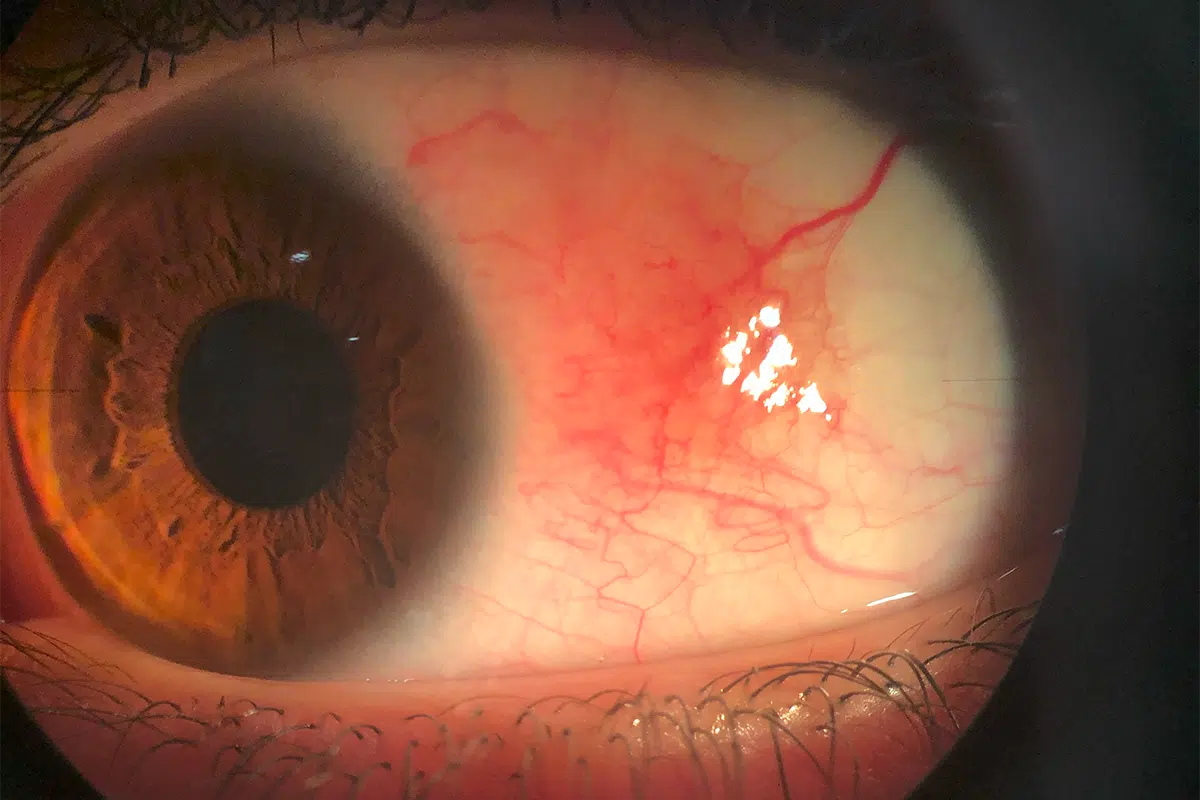
They are more common in people who work outdoors or live in hot, dry climates.
Pterygium can affect vision if it spreads onto the cornea.
Pterygium surgery has a high success rate when a conjunctival graft is used.


What arePterygium and Pinguecula?
✅ A pinguecula is a yellowish thickening of the conjunctiva, next to the cornea, that does not spread onto it
✅ A pterygium is a wing-shaped growth of fibrovascular tissue that advances from the conjunctiva onto the cornea
✅ Both usually appear on the side closest to the nose, although they can also develop on the outer side
✅ They are benign lesions, mainly linked to exposure to sun, wind and dryness
✅ A pinguecula does not usually affect vision; a pterygium can, if it advances towards the centre of the cornea
✅ Both may occasionally become inflamed and red
An eye examination makes it possible to tell them apart, assess how they are progressing and decide on the most suitable treatment.
Watch out for signs that may indicate their onset
✅ Eye redness, especially after exposure to sun, wind or dust
✅ A foreign-body or gritty sensation, or irritation in the eye
✅ Dry eyes, stinging and watering
✅ A visible yellowish or fleshy growth on the conjunctiva or cornea
✅ Discomfort when wearing contact lenses
✅ In advanced pterygium, blurred vision or induced astigmatism if it spreads onto the cornea
If you notice any of these symptoms, see an ophthalmologist to have the lesion assessed and the most suitable treatment determined.
Why do pterygium and pinguecula develop?
🔹 Prolonged exposure to ultraviolet (UV) radiation: the main factor in the development of these growths.
🔹 Dry, dusty environments: wind, sand and pollution can irritate the ocular surface.
🔹 Not wearing sunglasses enough: a lack of adequate protection increases the risk.
🔹 Genetic predisposition: some people are more prone to developing these conditions.
🔹 Age: they are more common in older adults, although they can appear in younger people exposed to risk factors.
🔹 Excessive screen use without adequate lubrication: this can contribute to dry eye and chronic irritation.
From conservative options to surgery in advanced cases
Treatment varies according to the severity and the patient's symptoms.
Treatment options:
🔹 Artificial tears: to relieve dryness and eye irritation.
🔹 Anti-inflammatory eye drops: to reduce inflammation in symptomatic cases.
🔹 Wearing sunglasses: to protect the eyes from UV radiation and prevent growth.
🔹 Surgical removal of the pterygium: indicated if it affects vision or causes persistent discomfort.
🔹 Advanced techniques with conjunctival graft: these reduce the risk of recurrence after surgery.
🔹 Regular ophthalmological follow-up: to monitor progression and prevent complications.
Our Clinic
Unique spaces designed with one philosophy: excellence in caring for your eyes.




Detailed Diagnosis
A trusted environment where we listen to you, carry out a detailed diagnosis and design a personalised treatment plan together.




Commitment to Excellence
A team of professionals led by Drs. Ramírez and Gálvez with a dual commitment: medical excellence and close, human care.


Cutting-Edge Technology
Equipped with the latest technology to ensure diagnoses of maximum precision and to plan every treatment with complete safety.
Answers to your questions
We answer the most common questions about the symptoms and treatment of pterygium and pinguecula. Find all the information you need here to look after your vision with confidence.
Can pterygium or pinguecula disappear on their own?
No, once they appear, they do not go away on their own. They may stabilise or grow over time.
Is surgery the only option for pterygium?
Not always. If it does not affect vision or cause discomfort, conservative treatments such as lubricating and anti-inflammatory eye drops can be used.
Can a pinguecula turn into a pterygium?
It is not usual, although in some cases a pinguecula can progress towards a pterygium if the irritation and exposure to risk factors continue.
How long does recovery take after pterygium surgery?
Full recovery can take several weeks. It is advisable to avoid sun exposure and follow medical advice for better healing.
Can pterygium and pinguecula be prevented?
Yes, by wearing sunglasses with a UV filter, keeping the eyes well lubricated and protecting them from wind and dryness.
Can pterygium grow back after surgery?
There is a small risk of recurrence, but with advanced techniques such as conjunctival grafting, this risk is significantly reduced.