


Vitreous Detachment
Vitreous detachment is a common eye condition, especially in people over 50. It occurs when the vitreous gel that fills the inside of the eye loses its consistency and separates from the retina.

It occurs naturally with age and affects most people at some point.
In 90% of cases it causes no serious problems, but 10% may develop retinal complications.
If new or sudden symptoms appear, an urgent eye examination is essential.
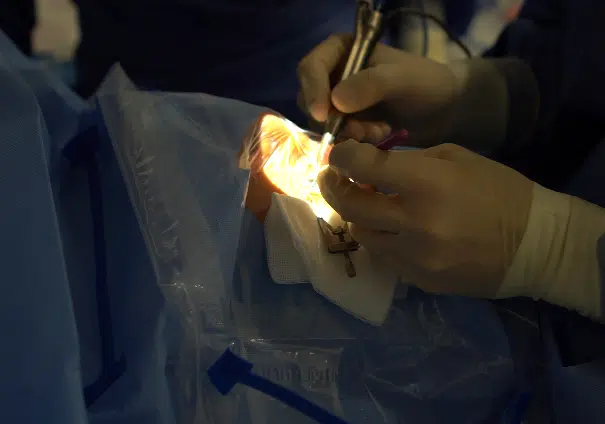

What is Vitreous Detachment?
The vitreous humour is a gel-like substance that fills the inside of the eye and is in contact with the retina. With age, this gel loses its structure and shrinks, which can cause it to come away from the retina.
This process is usually harmless, but in some cases it can pull on the retina, increasing the risk of retinal tears or retinal detachment, which does require urgent treatment.
How do you know if it is happening to you?
Vitreous detachment can cause a number of visual symptoms, which usually appear suddenly:
🔹 Floaters: small shadows or specks that move across your field of vision.
🔹 Flashes of light: a sensation of lightning or flashes, especially at the edge of your vision.
🔹 A shadow or curtain over your vision: in serious cases, this may indicate retinal detachment.
🔹 Blurred vision or a sensation of seeing floating "threads".
If you experience a sudden increase in floaters, persistent flashes or loss of vision, it is essential to see an ophthalmologist to rule out serious complications.
Why does vitreous detachment happen?
This process is related to the ageing of the eye, but other factors can make it more likely.
📌 Risk factors for vitreous detachment:
✅ Advanced age: more common in people over 50.
✅ High myopia: increases the risk of early vitreous detachment.
✅ Previous eye surgery: such as cataract surgery.
✅ Eye inflammation: such as uveitis.
✅ Trauma or blows to the eye.
Monitoring and follow-up to prevent complications
In most cases, vitreous detachment does not require treatment, as over time the brain gets used to the floaters and they may reduce naturally. However, in specific cases, options such as the following may be considered:
🔹 Observation and regular check-ups: to detect any changes in the retina.
🔹 Vitrectomy: surgery in exceptional cases where floaters severely affect vision.
The most important thing is early diagnosis, because if vitreous detachment causes a retinal tear, laser or cryotherapy treatment may be needed to prevent retinal detachment.
Our Clinic
Unique spaces designed with one philosophy: excellence in caring for your eyes.




Detailed Diagnosis
A trusted environment where we listen to you, carry out a detailed diagnosis and design a personalised treatment plan together.




Commitment to Excellence
A team of professionals led by Drs. Ramírez and Gálvez with a dual commitment: medical excellence and close, human care.


Cutting-Edge Technology
Equipped with the latest technology to ensure diagnoses of maximum precision and to plan every treatment with complete safety.
Answers to your questions
We answer the most common questions about the symptoms and treatment of vitreous detachment. Here you will find all the information you need to look after your vision with confidence.
Is vitreous detachment dangerous?
On its own, it is not usually serious. However, in some cases it can cause retinal detachment, which does require immediate treatment.
Do floaters go away over time?
In most cases, yes. The brain adapts and stops perceiving them so intensely.
Can vitreous detachment be prevented?
It cannot be prevented completely, but having regular eye check-ups and protecting your eyes from injury helps detect any problem in time.
Can I have surgery to remove floaters?
Only in severe cases. Vitrectomy is an operation that can remove the opacities, but it is reserved for cases where they affect the patient’s quality of life.
Should I be worried if I suddenly see flashes or lots of floaters?
Yes, a sudden increase in symptoms may indicate a problem with the retina. You should see an ophthalmologist immediately.