


Eyelid Tumours
Eyelid tumours are lesions that appear on the eyelids and can be benign or malignant.
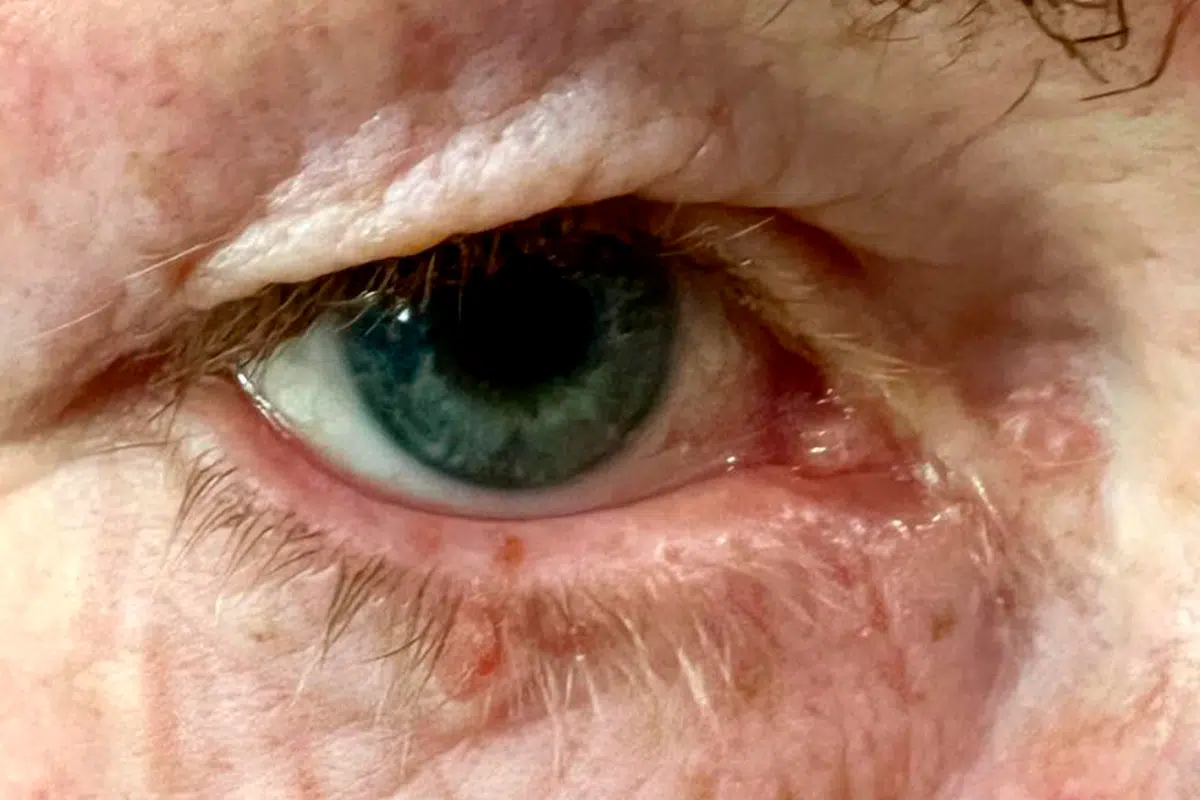
90% of malignant eyelid tumours are basal cell carcinomas.
Sun exposure is the main risk factor for eyelid cancer.
Surgical removal with reconstruction achieves excellent functional and aesthetic results.


What are Eyelid Tumours?
Eyelid lesions that need medical attention.
Eyelid tumours are abnormal growths in the skin of the eyelids. They can appear as lumps, ulcers, pigmented lesions or areas of thickened skin.
These tumours can be classified as:
🔹 Benign: They pose no risk to health, but can grow and cause discomfort or affect the appearance of the eyelid.
🔹 Malignant: They can invade the surrounding tissues and must be treated immediately to avoid complications.
Early diagnosis is key to effective treatment.
When should you see an ophthalmologist?
✅ Lumps or nodules on the eyelid.
✅ Changes in skin colour or texture.
✅ Gradual growth of a lesion.
✅ Loss of eyelashes in the affected area.
✅ Ulcers or sores that do not heal.
✅ Swelling or bleeding of the eyelid.
If you notice any of these signs, an eye examination is essential to determine the nature of the lesion.
Benign and malignant eyelid tumours
✅ Benign Eyelid Tumours
These are the most common and generally do not need urgent treatment. Examples include:
🔹 Papillomas: Small, wart-like growths.
🔹 Sebaceous cysts: Lumps formed by a build-up of oil.
🔹 Naevi (moles): Pigmented lesions that can be flat or raised.
🔹 Sebaceous hyperplasia: Small yellowish bumps.
In many cases, these tumours can be removed for cosmetic or functional reasons.
❌ Malignant Eyelid Tumours
These are less common but require specialist treatment. The most frequent are:
🔹 Basal cell carcinoma: The most common malignant tumour of the eyelids. It grows slowly and rarely spreads.
🔹 Squamous cell carcinoma: More aggressive than basal cell carcinoma, it can invade nearby tissues.
🔹 Sebaceous carcinoma: It can be mistaken for chronic blepharitis and requires early diagnosis.
🔹 Melanoma: A rare malignant tumour of the eyelids, but with a high risk of spreading.
Treatment usually involves surgical removal, ensuring the tumour is completely removed while preserving eyelid function.
Accurate assessment for the right treatment
At Clínica Ramírez & Gálvez, we carry out a detailed analysis to distinguish between benign and malignant tumours.
🔹 Eye examination: Clinical assessment of the lesion.
🔹 Dermatoscopy: Magnifying lenses are used to analyse microscopic details.
🔹 Biopsy: A small sample is taken for histological examination to confirm whether the tumour is benign or malignant.
🔹 Imaging tests: In advanced cases, tests such as ultrasound or MRI may be performed.
Early diagnosis allows more effective and less invasive treatment.
Our Clinic
Unique spaces designed with one philosophy: excellence in caring for your eyes.




Detailed Diagnosis
A trusted environment where we listen to you, carry out a detailed diagnosis and design a personalised treatment plan together.




Commitment to Excellence
A team of professionals led by Drs. Ramírez and Gálvez with a dual commitment: medical excellence and close, human care.


Cutting-Edge Technology
Equipped with the latest technology to ensure diagnoses of maximum precision and to plan every treatment with complete safety.
Answers to your questions
We answer the most common questions about eyelid tumours. Find all the information you need here to make your decision with complete confidence.
Are all eyelid lumps malignant tumours?
No, most are benign, but a medical assessment is important to rule out malignant lesions.
How is a benign tumour distinguished from a malignant one?
The ophthalmologist will examine the appearance of the lesion and, if necessary, perform a biopsy to confirm the diagnosis.
Is eyelid tumour removal surgery painful?
No, it is performed under local anaesthesia and is a safe, well-tolerated procedure.
Can eyelid cancer be prevented?
Using sun protection on the skin and wearing sunglasses help reduce the risk of malignant lesions.
What happens if an eyelid tumour is not treated?
If it is malignant, it can grow and invade other tissues. If it is benign, it can grow larger and cause discomfort.