



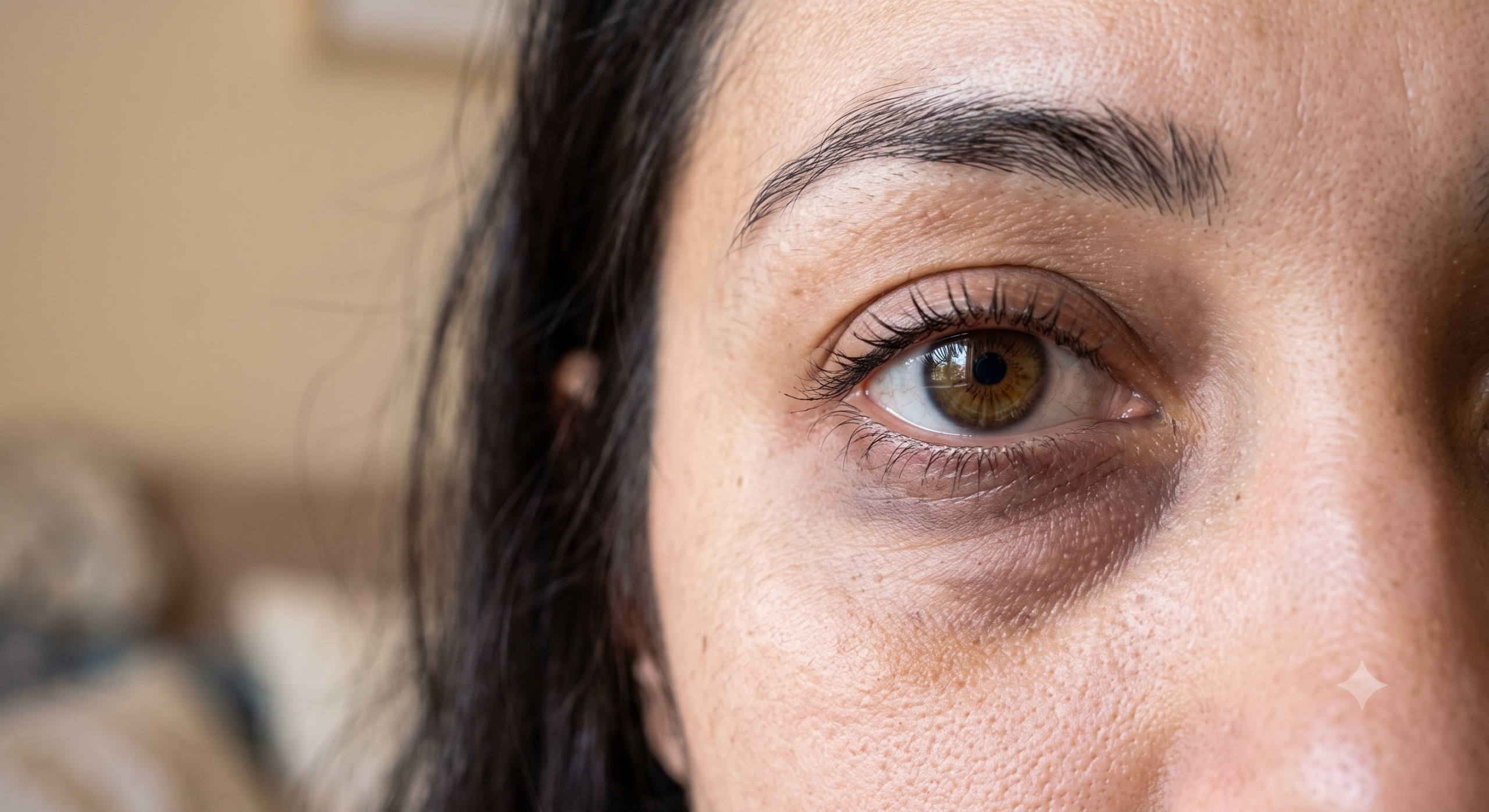
Dark circles, that darkening or hollowing that appears just below our eyes, are one of the most common aesthetic concerns we see in consultation. By disrupting the harmony and freshness of the face, they can make us look much more tired, dull or older than we really are. However, when it comes to caring for the eye area there are no one-size-fits-all solutions: it is essential to understand that not all dark circles are the same and that their causes vary significantly from one person to another.
At Clínica Ramírez & Gálvez we know that summer, with its intense sunlight and changes in routine, is a critical time when these signs can become more pronounced. That is why we want to help you identify which type of dark circles you have and which medical approach is best suited to restoring vitality and brightness to your eyes.
Understanding the different types of dark circles 🪞
To treat dark circles truly effectively, the crucial first step is an accurate diagnosis of their origin. Medically, we classify them into four main groups according to their underlying components:
1. Pigmented Dark Circles (Excess Melanin)
These are caused by an excessive build-up of pigment in the delicate skin of the lower eyelid and typically have a brownish tone. They are more common in medium to dark skin phototypes, and one of their key features is that their colour does not improve when the skin is gently stretched.
- The impact of summer: During these months, avoiding direct sun exposure is essential, as the sun activates melanin and dramatically worsens this type of dark circle.
- Treatment: A combined strategy is required, including in-clinic medical depigmenting peels (such as Toskani’s WPCR), supervised medical skincare at home and, in selected cases, intense pulsed light (IPL) or depigmenting laser.
2. Vascular Dark Circles (Skin Transparency)
These originate from the thinness of the skin in this area, which becomes so fine that the network of small blood vessels just beneath it shows through. They are characterised by a purplish or bluish colour. Unlike pigmented dark circles, their colour tends to fade noticeably when the skin is gently stretched.
- Treatment: They are addressed with creams containing specific active ingredients such as caffeine or vitamin K (which strengthen the blood vessels), Intense Pulsed Light (IPL) sessions or skin biostimulation treatments to increase the thickness of the dermis.
3. Structural or Hollow Dark Circles (Volume Loss)
These appear as a marked or “deep” groove beneath the eye. This structural hollowing casts a shadow that darkens the area and is mainly caused by the natural reabsorption of facial fat over time or by inherited anatomy.
- Treatment: The most common non-surgical option is hyaluronic acid filler, injected deep, just above the bone, to restore lost volume and soften the shadow. Another long-lasting alternative is lipofilling (a graft of the patient’s own fat).
4. Mixed Dark Circles
In these, several of the above factors coexist and combine at the same time (for example, pigmentation, visible blood vessels and hollowing), which calls for a personalised, step-by-step approach to treat each cause specifically.
A key difference: don’t confuse dark circles with eye bags ❌
These two terms are very often confused because they appear in the same area of the face, but they are completely different conditions that require radically different treatments:
- Dark circles involve a change in skin colour or a hollowing caused by a lack of support.
- Eye bags, on the other hand, consist of a bulging or outward protrusion of the fat surrounding the eyeball, creating a permanently puffy appearance. The primary and definitive treatment for eye bags is surgical: a lower blepharoplasty, which allows this fatty tissue to be removed or redistributed cleanly and durably.
Precise diagnosis in Lucena and Torre del Mar 🏥
The periocular area is the most complex and delicate part of facial anatomy. That is why, at our clinics in Lucena and Torre del Mar, our team of ophthalmic surgeons specialising in oculoplastic surgery carries out a thorough medical assessment of each patient. We study the structure, bone support, skin quality and microcirculation to determine, with complete honesty, which protocol will deliver the safest, most harmonious and most natural results for your eyes.
Don’t mask tired-looking eyes with temporary solutions. Restoring vitality and freshness to your expression is the first step to looking good and feeling better again.
Would you like to find out which type of dark circles you have and how to even out your skin tone this summer? Book your consultation at our clinics in Lucena or Torre del Mar and put yourself in the hands of true eye specialists! 📅🩺