



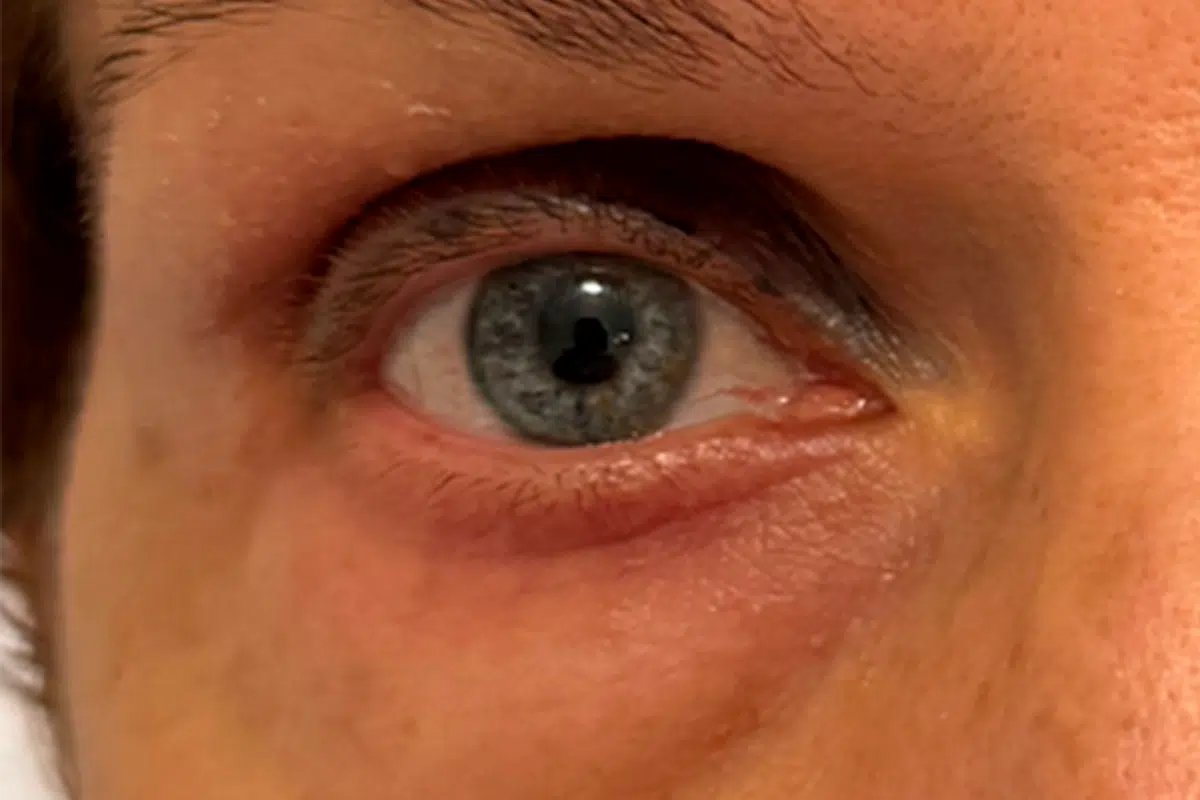
Over the years, the skin of the upper eyelid loses firmness, fine lines appear and your eyes start to look more tired than you actually feel. Many people who notice these changes would rather avoid the operating theatre, which is why we are increasingly asked the same question in clinic: is there a non-surgical blepharoplasty that really works?
The answer is yes, with some important caveats. Non-surgical blepharoplasty with fractional plasma can noticeably improve the appearance of the eyelids in the right cases, but it is not a substitute for surgery in every patient. At Ramírez & Gálvez Clinics we explain what it is, who it is suitable for, what the session involves and when we would recommend surgery instead.
What is non-surgical blepharoplasty with plasma? 💡
It is a treatment that uses fractional plasma energy (popularly known as “Plasma Pen”) to work on the eyelid skin without incisions or a scalpel. The device delivers tiny, highly precise points of energy to the surface of the skin, spaced apart from one another, creating controlled micro-injuries.
In response to these micro-injuries, the skin tends to tighten and collagen production is stimulated. The result is eyelid skin that is somewhat tighter, firmer and smoother, with an improvement that becomes gradually more visible over the following weeks.
It is important to understand its limits: plasma acts on the skin. It does not remove fat, it does not change the muscle that lifts the eyelid and it cannot eliminate large amounts of excess tissue. That is why choosing the right patient is the key to a good result.
Who is it suitable for? ✅
Non-surgical blepharoplasty usually works well in people with mild to moderate signs of ageing around the eyes, for example:
- Mild excess skin on the upper eyelid: that small fold that starts to feel “heavy” and makes you look tired.
- Fine lines and thin, crepey skin on the eyelids and around the eyes.
- Mild skin laxity in people looking for subtle rejuvenation without surgery.
- People who, for personal or medical reasons, prefer to avoid surgery and are happy with a more subtle result.
And who is it NOT the best option for? ⚠️
This is where a medical diagnosis makes all the difference. In some situations plasma will not give you the result you are hoping for, and the honest thing is to tell you so from the start:
- Fat bags: when the fat around the eye bulges forward and forms noticeable bags, plasma cannot remove it. In these cases surgery is the appropriate treatment.
- Significant excess skin: if the upper eyelid fold is large or reaches the lashes, the tightening that plasma achieves will fall short.
- Droopy eyelid caused by the muscle (ptosis): if it is the eyelid itself that sits low, not just the skin, the problem lies in the lifting muscle and needs a different treatment. Find out more on our page about droopy eyelids (ptosis).
- Situations requiring caution: pregnancy, active infections or lesions in the area, a tendency to abnormal scarring or skin more prone to pigmentation. Your doctor will assess each case before recommending the treatment.
What are the session and recovery like? 🩺
Everything starts with a personalised medical assessment to confirm that you are a good candidate. If you are, the procedure is simple and carried out as an outpatient:
- Skin preparation and application of a topical anaesthetic cream to minimise discomfort.
- Fractional plasma is applied point by point to the eyelid skin, always protecting the eyeball.
- You go home the same day with written aftercare instructions.
After the session it is normal to notice some swelling and redness for the first few days. A very small scab forms on each treated point and falls off on its own within a few days. It is important not to pick them, as they are part of the healing process. In the meantime you can lead a fairly normal life, although it is best to wait until the scabs have gone before wearing make-up on the area again.
Depending on the degree of laxity, one session may be enough or several may be needed, always leaving a few weeks between them. The effect lasts for some time, but the skin continues to age, so maintenance sessions may be considered over the years.
Aftercare: sun protection is key ☀️
- Strict sun protection: newly treated skin is more sensitive and sun exposure can encourage pigmentation. Use a high-SPF sunscreen as soon as your doctor allows, wear sunglasses and avoid direct sun exposure for the following weeks.
- Gentle cleansing: clean the area delicately, without rubbing, and only apply the products we have recommended.
- Do not remove the scabs: let them fall off naturally so that the skin heals evenly.
- Get in touch if in doubt: if you notice severe pain, discharge or redness that is not improving, contact the clinic.
When is surgery the better choice? 🏥
When there are fat bags, significant excess skin or the upper eyelid skin starts to get in the way of your vision, surgical blepharoplasty remains the most effective option. It allows the surplus skin to be removed precisely and, if needed, the fat bags to be treated, with a more noticeable and longer-lasting result than any non-invasive technique can offer.
It is not about one technique being “better” than the other, but about choosing the right one for your eyelids. Sometimes the two can even complement each other: surgery corrects the excess tissue, and plasma or laser can then improve the quality of the skin.
Why it should be performed by a medical specialist 👨⚕️
The eyelids have the thinnest skin on the body and sit just millimetres from the eye. A plasma treatment that is poorly indicated or poorly applied can leave pigmentation or scarring, or affect how the eyelid closes. That is why at our clinics non-surgical blepharoplasty is performed by doctors specialising in ophthalmology and oculoplastic surgery, Dr Sonia Gálvez and Dr Javier Ramírez, who know the anatomy of the eye area inside out and can also offer you the surgical alternative when that is what you need.
Frequently asked questions ❓
Does it hurt? With topical anaesthetic, most patients describe a feeling of warmth or small pinpricks that is easily tolerated.
When will I see results? A first improvement is visible once the scabs fall off, and the effect continues to build over the following weeks as new collagen forms.
Can I find out whether I am a candidate without travelling? Yes. You can complete our online blepharoplasty assessment and we will advise you on whether your case is better suited to non-surgical treatment or to surgical blepharoplasty.
Would you like to refresh your eyes without surgery but are not sure whether it is right for you? Book an assessment at our clinics in Torre del Mar or Lucena and we will tell you honestly which option suits you best. 📅✨