



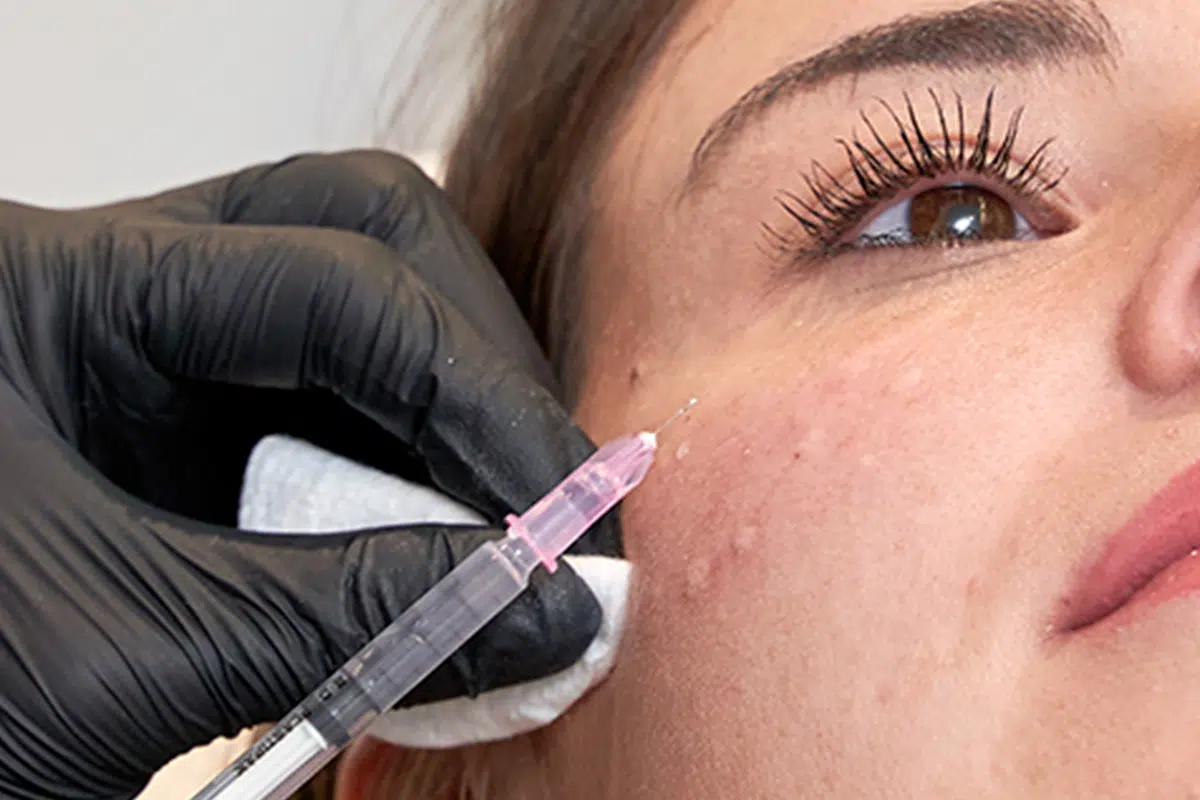
Tear trough filler with hyaluronic acid is one of the most requested aesthetic medicine treatments. When done well, it can erase a tired look in minutes. However, it is also one of the procedures that causes the most complications and unsatisfactory results when it is not carried out with the right anatomical knowledge.
As oculoplastic surgeons, specialists in eyelid anatomy, we see many patients in our clinic who are frustrated with results from other centres: persistent swelling, visible lumps or a strange bluish tint. At Clínica Ramírez & Gálvez, we explain the 4 most common mistakes in tear trough filler and how to avoid them.
Mistake 1: The Wrong Diagnosis (The Most Serious)
As we explained in our previous post, an eye bag and a dark circle are not the same thing.
- The Dark Circle (Tear Trough): This is a hollow (loss of volume) and it CAN be treated with filler.
- The Eye Bag: This is a bulge (herniated fat) and it is NOT treated with filler.
Trying to “camouflage” a fat bag (a bulge) by injecting more volume (hyaluronic acid) on top of it is the most serious diagnostic mistake. The result is an even bigger bulge and a swollen, unnatural appearance. Eye bags can only be corrected surgically (blepharoplasty).
Mistake 2: The Wrong Product (Not All Hyaluronic Acid Is Suitable)
The skin of the lower eyelid is the thinnest in the whole body. You cannot use the same type of hyaluronic acid used for a cheekbone or a lip. This area requires a specific product with low cross-linking that absorbs very little water (low hydrophilicity).
Using a product that is too dense or that attracts a lot of water will cause persistent swelling (oedema), which the patient mistakes for “bags” and which does not go away.
Mistake 3: The Wrong Injection Plane (The Famous “Tyndall Effect”)
This is the most visible technical mistake. If the filler is injected too superficially (just beneath the thin skin), light is reflected through the hyaluronic acid gel, creating a visible bluish or greyish tint. This is the Tyndall Effect.
Tear trough filler must be placed in a deep plane, just above the orbital bone, to replace the lost volume in the right area without it being noticeable.
Mistake 4: Too Much Product (“Less Is More” Under the Eyes)
The tear trough is an area that demands maximum precision. The aim is not to “plump up” or erase the dark circle completely, but to soften the transition between the eyelid and the cheek. It is very common to see “overfilled” patients with a result that looks puffy. Under the eyes, it is always better to err on the side of caution and, if needed, carry out a small touch-up a few weeks later.
The Most Delicate Area of the Face Requires Expert Hands 🌟
Treating dark circles is, without doubt, one of the most complex procedures in aesthetic medicine. It requires millimetre-precise anatomical knowledge of the eyelid, a perfect differential diagnosis (eye bag vs. dark circle) and an impeccable injection technique.
For this reason, an oculoplastic surgeon, the ophthalmologist who specialises in the structure of the eyelids, is the ideal professional to carry out this treatment with maximum safety and natural-looking results.
If you have had an unsatisfactory result or are thinking of treating your dark circles for the first time, book your appointment. At Clínica Ramírez & Gálvez we will give you an honest diagnosis and the best solutions.