


Congenital Cataract
A congenital cataract is a clouding of the eye’s lens that is present from birth or develops in the first months of life. It can affect one or both eyes and, if not treated in time, can interfere with the child’s visual development.
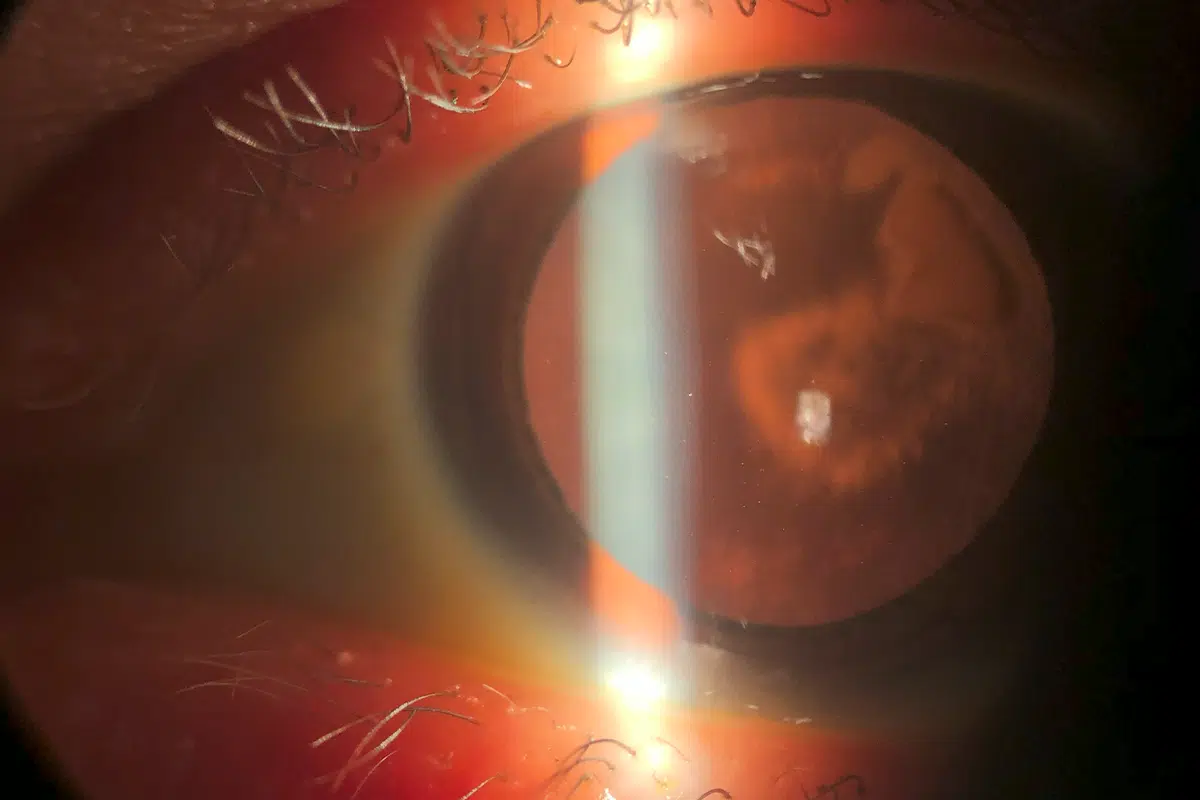
It affects approximately 3 in every 10,000 births.
Early surgery improves the chances of normal vision.
Glasses or contact lenses are needed in many cases after the operation.


What is a congenital cataract?
An eye problem that can cause loss of vision from birth.
The lens is the eye's natural lens, which allows images to be brought into sharp focus. When it becomes cloudy, it prevents light from entering the eye properly, causing blurred vision or even blindness if the cataract is very dense.
Depending on its size and location, the cataract may affect vision partially or completely. In severe cases, surgery is necessary to prevent the affected eye from developing amblyopia (lazy eye).
How can you tell if your baby or child has cataracts?
✅ A white reflection in the pupil (leukocoria).
✅ Difficulty fixing the gaze on objects or faces.
✅ Abnormal eye movements (nystagmus).
✅ Lack of visual response to stimuli.
✅ Strabismus (a turned eye).
✅ Blurred or cloudy vision.
If you notice any of these symptoms in your baby or child, it is essential to see a paediatric ophthalmologist for an early assessment.
Why does this change in the lens occur?
🔹 Genetic factors: It may be hereditary if there is a family history.
🔹 Infections during pregnancy: Such as rubella, toxoplasmosis or chickenpox.
🔹 Metabolic diseases: Such as galactosaemia or congenital hypothyroidism.
🔹 Genetic syndromes: Associated with conditions such as Down syndrome.
🔹 Eye injuries: Although this is less common in newborns.
In many cases the exact cause is unknown, but early diagnosis makes it possible to start the right treatment to avoid permanent vision problems.
Options to preserve and improve children's vision
🔹 Observation and monitoring: In mild cases where the cataract does not significantly affect vision.
🔹 Cataract surgery in babies and children: When the cataract affects visual development, the cloudy lens must be removed surgically.
🔹 Intraocular lenses (IOLs): These are implanted in some cases to replace the natural lens.
🔹 Optical correction after surgery: With glasses or special contact lenses to improve vision.
🔹 Vision therapy: Some children need treatment to stimulate the operated eye and prevent amblyopia.
Cataract surgery in babies and children is a safe and highly effective procedure when performed by specialists in paediatric ophthalmology.
Our Clinic
Unique spaces designed with one philosophy: excellence in caring for your eyes.




Detailed Diagnosis
A trusted environment where we listen to you, carry out a detailed diagnosis and design a personalised treatment plan together.




Commitment to Excellence
A team of professionals led by Drs. Ramírez and Gálvez with a dual commitment: medical excellence and close, human care.


Cutting-Edge Technology
Equipped with the latest technology to ensure diagnoses of maximum precision and to plan every treatment with complete safety.
Answers to your questions
We answer the most common questions about congenital cataracts in children. Here you will find all the information you need to look after your child's vision with confidence.
How is congenital cataract detected in a newborn?
The paediatrician performs a red reflex test in the first days of life. If any abnormality is found, a consultation with a paediatric ophthalmologist is recommended.
Do all congenital cataracts require surgery?
No, some small cataracts do not affect vision and only require monitoring. However, if they interfere with visual development, surgery is the best option.
Is cataract surgery safe for children?
Yes, it is a common procedure in paediatric ophthalmology and offers excellent results if performed in time.
How long does recovery take after cataract surgery in babies?
Recovery is quick. The child will need ophthalmological follow-up and optical correction to ensure proper visual development.
Can congenital cataract be prevented?
Not always, but proper antenatal care and maternal vaccination against diseases such as rubella can reduce the risk.
What happens if congenital cataract is not treated?
It can lead to amblyopia (lazy eye) or even blindness in the affected eye.