


Congenital Ptosis
Congenital ptosis is a condition in which one or both upper eyelids droop abnormally from birth.
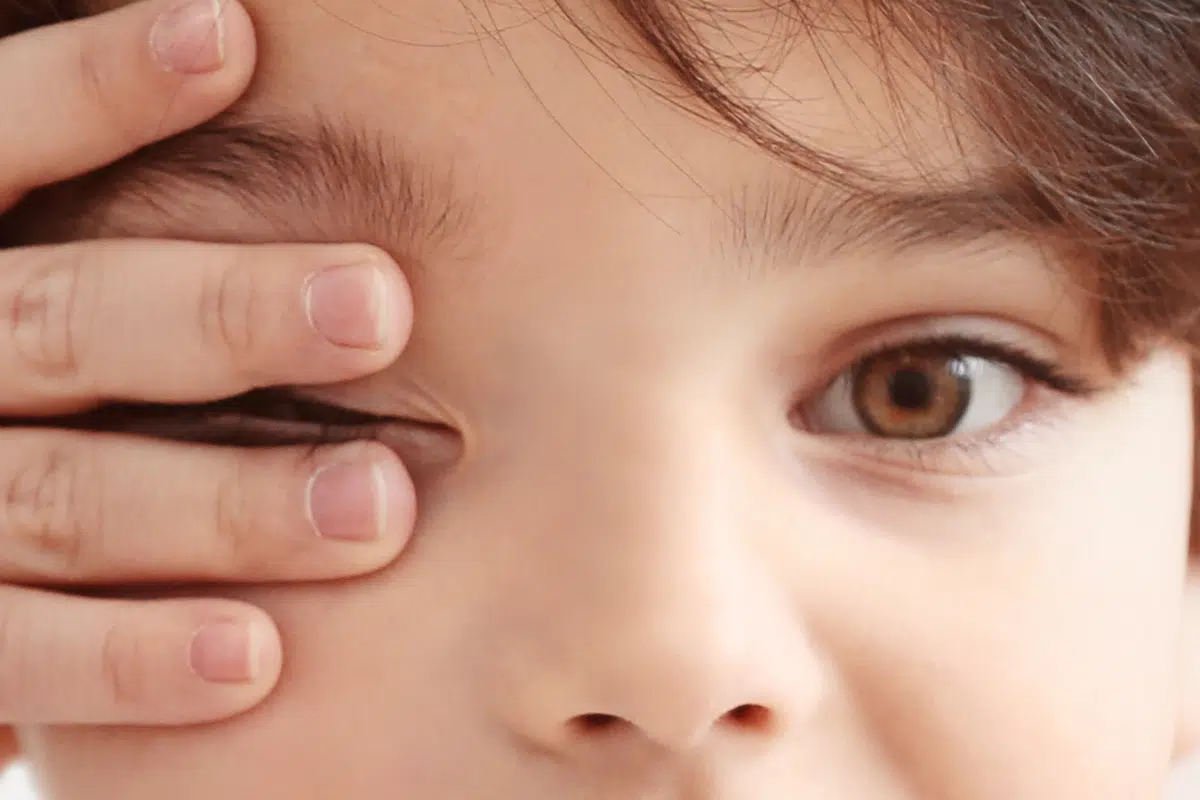
It affects approximately 1 in every 1,000 children.
In severe cases, it can lead to amblyopia if not treated in time.
Surgery offers good functional and cosmetic results.


What is congenital ptosis?
An eyelid defect that can compromise a child's vision.
Congenital ptosis occurs when the levator muscle of the upper eyelid does not develop properly before birth. This prevents the child from fully opening the affected eye, which can interfere with their field of vision and the development of binocular vision.
In some cases, ptosis may be associated with neuromuscular disorders or congenital syndromes that require a full ophthalmological and neurological assessment.
Signs that may indicate ptosis in babies and children
✅ A drooping eyelid on one or both eyes from birth.
✅ Difficulty seeing, if the eyelid covers the pupil.
✅ Tilting the head back or raising the eyebrows to compensate.
✅ Asymmetry in how wide the eyelids open, which can affect facial appearance.
✅ Problems with visual development (amblyopia).
✅ Associated strabismus in some cases.
If you notice any of these symptoms in your child, it is essential to arrange an eye assessment to determine the severity of the ptosis and whether corrective treatment is needed.
Why does this eyelid condition occur?
🔹 Underdevelopment of the levator muscle of the eyelid: This is the most common cause and is due to a defect in the formation of the muscle during pregnancy.
🔹 Neuromuscular disorders and eyelid syndromes: Certain conditions, such as congenital myasthenia gravis, or syndromes such as congenital blepharophimosis can be associated with ptosis.
🔹 Neurological syndromes: Such as Horner's syndrome or third cranial nerve palsy, which include ptosis among their features.
🔹 Birth injuries: Although less common, damage to the nerves or muscles of the eyelid during birth can cause ptosis.
Early detection is key to avoiding vision problems in the future.
Options to improve eyelid function and appearance
🔹 Monitoring and follow-up: In mild cases, where the ptosis does not significantly affect vision.
🔹 Optical correction and vision therapy: If the ptosis has caused amblyopia, treatment is needed to stimulate the affected eye.
🔹 Ptosis surgery: In moderate or severe ptosis that interferes with vision, surgery is performed to lift the eyelid.
🔹 Frontalis suspension surgery: In severe cases, where the levator muscle is very weak, the frontalis (forehead) muscle is used to help lift the eyelid.
Ptosis surgery in children is a safe and effective procedure when performed by ophthalmologists specialising in eyelids and paediatric ophthalmology.
Our Clinic
Unique spaces designed with one philosophy: excellence in caring for your eyes.




Detailed Diagnosis
A trusted environment where we listen to you, carry out a detailed diagnosis and design a personalised treatment plan together.




Commitment to Excellence
A team of professionals led by Drs. Ramírez and Gálvez with a dual commitment: medical excellence and close, human care.


Cutting-Edge Technology
Equipped with the latest technology to ensure diagnoses of maximum precision and to plan every treatment with complete safety.
Answers to your questions
We answer the most common questions about congenital ptosis in children. Here you will find all the information you need to look after your child's vision with confidence.
Does all congenital ptosis need surgery?
No, only cases that interfere with vision or cause marked cosmetic asymmetry.
At what age is surgery for congenital ptosis recommended?
It depends on how much vision is affected. In severe cases, surgery is recommended before the age of 2 to prevent amblyopia from developing. In mild cases, it can wait until school age.
Is congenital ptosis surgery safe?
Yes, it is a procedure performed by specialist ophthalmologists, with excellent functional and cosmetic results.
How long does recovery take after ptosis surgery in children?
Initial recovery is quick, but ophthalmological follow-up is needed to make sure the eyelid heals properly and does not affect vision.
Can congenital ptosis come back after surgery?
In some cases there may be a slight recurrence as the child grows, but this can be corrected with minor adjustments.
Can congenital ptosis be prevented?
No, as it is a condition present from birth, but early diagnosis and treatment can prevent future vision problems.