


Presbyopia or Age-Related Long-Sightedness
Presbyopia, or age-related long-sightedness, is a natural eye condition associated with ageing. Over time, the eye’s crystalline lens loses flexibility, making it harder to focus on close objects.
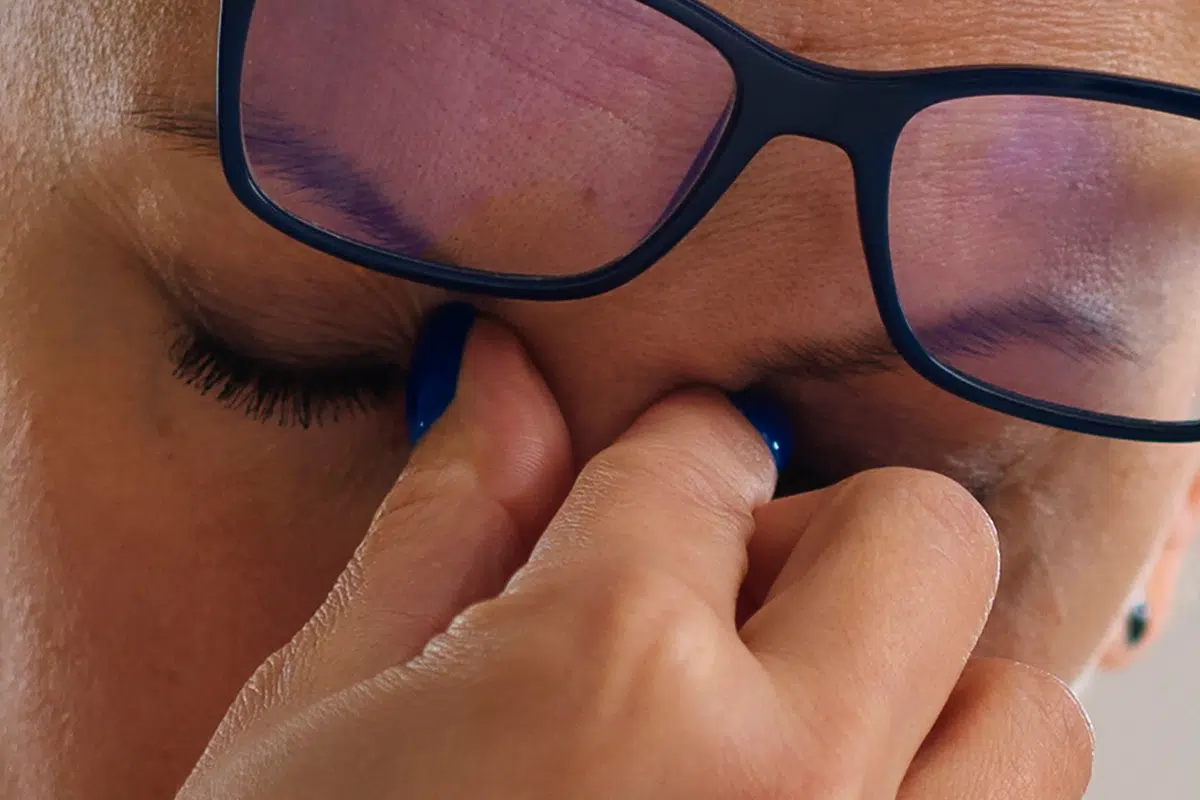
More than 90% of people over the age of 45 have some degree of presbyopia.
Presbyopia surgery can reduce or eliminate the need for reading glasses.
Early diagnosis and regular check-ups help maintain good visual quality.


What is Presbyopia?
Presbyopia is the gradual loss of the eye's ability to focus up close due to the stiffening of the crystalline lens. It is a progressive condition that worsens over time and usually shows up as difficulty reading, looking at your mobile phone or doing everyday close-up tasks.
📌 Key features of presbyopia:
✅ It affects almost everyone from the age of 40–45.
✅ It progresses gradually until it stabilises at around the age of 60.
✅ It can be corrected with glasses, contact lenses or refractive surgery.
Regular eye check-ups are important to detect presbyopia in time and find the best solution for each patient.
How do you know if you have presbyopia?
The symptoms of presbyopia usually appear gradually. Common signs include:
🔹 Difficulty reading up close, especially in low light.
🔹 Needing to hold your phone or book further away to see clearly.
🔹 Eye strain and headaches after prolonged close-up work.
🔹 Blurred vision at short distances.
🔹 Tired, dry eyes, especially at the end of the day.
If you notice any of these symptoms, it is advisable to see an ophthalmologist to assess your vision and determine the best treatment.
Why does presbyopia develop?
Presbyopia is directly related to the ageing of the crystalline lens, but other factors can influence when it appears and how it progresses.
📌 Factors that favour the onset of presbyopia:
✅ Age: from the age of 40, the lens naturally loses elasticity.
✅ Genetic factors: some people may develop it earlier than others.
✅ Excessive screen use: can accelerate eye strain and worsen symptoms.
✅ Other eye conditions: such as long-sightedness (hyperopia), which can make presbyopia noticeable earlier.
Although presbyopia is inevitable, there are different options to improve visual quality and minimise its effects.
Different solutions for each patient
There is no definitive cure for presbyopia, but there are several options to correct it and improve near vision.
🔹 Glasses for presbyopia: the most common option. They can be single-vision, bifocal or progressive (varifocal).
🔹 Multifocal contact lenses: an alternative for those who prefer not to wear glasses.
🔹 Laser surgery: procedures such as PRESBYLASIK reshape the curvature of the cornea to improve focus at all distances.
🔹 Intraocular lenses: implanted in the eye, they offer a permanent solution for presbyopia.
At Clínica Ramírez & Gálvez, we carry out a personalised assessment to determine the best treatment option for each patient's needs.
Our Clinic
Unique spaces designed with one philosophy: excellence in caring for your eyes.




Detailed Diagnosis
A trusted environment where we listen to you, carry out a detailed diagnosis and design a personalised treatment plan together.




Commitment to Excellence
A team of professionals led by Drs. Ramírez and Gálvez with a dual commitment: medical excellence and close, human care.


Cutting-Edge Technology
Equipped with the latest technology to ensure diagnoses of maximum precision and to plan every treatment with complete safety.
Answers to your questions
We answer the most common questions about the symptoms and treatment of presbyopia (age-related long-sightedness). Here you will find all the information you need to regain your vision with confidence.
At what age does presbyopia appear?
It usually begins between the ages of 40 and 45 and progresses until around 60.
Does presbyopia get worse over time?
Yes, it is a progressive process until the lens completely loses its flexibility.
Are glasses the only solution?
No. There are contact lenses and surgical options that can correct presbyopia.
Can I have surgery to correct presbyopia?
Yes, surgical techniques such as PRESBYLASIK or intraocular lens implantation can improve near vision.
Does excessive screen use speed up presbyopia?
It does not cause it, but it can increase eye strain and make symptoms appear earlier.
When should I see an ophthalmologist?
If you notice difficulty focusing up close or frequent eye strain, an eye examination is advisable.